📍 Puebla
Puebla
Building trust in bike-sharing to create a safer, more inclusive transport environment
Puebla is testing a new, state-led approach to bike-sharing. The system is designed with lessons from a previous system and built with gender safety and financial sustainability at its core
Puebla at a glance
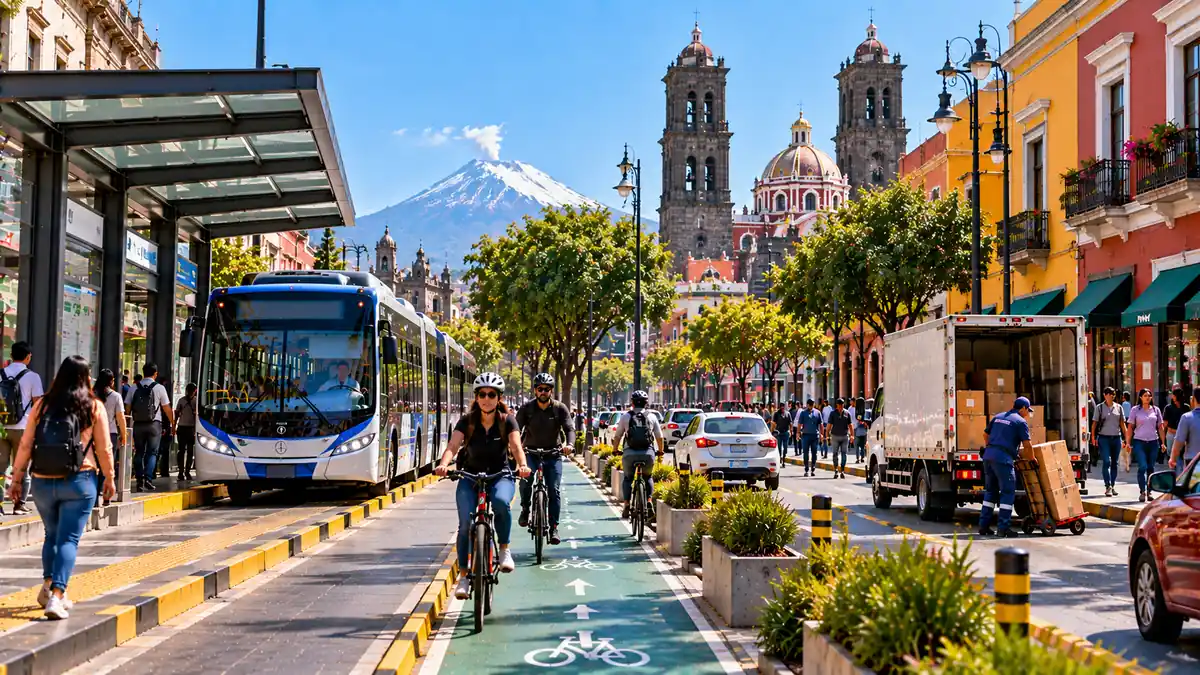
Puebla de Zaragoza is the capital and most populous municipality in Puebla state. The city has begun investing in cycling infrastructure, recently adding 24 kilometres of protected bike lanes to its existing 160. In addition, local authorities are updating the city's Sustainable Urban Mobility Program with bike-sharing as a stated priority.
From 2017 to 2020 in partnership with CycloShare, the city was home to BiciPuebla, a bike-sharing system. There were 1,000 bikes across 70 stations.That system was ultimately shut down but the lessons learnt were captured and the delivery of a new system has the potential to alleviate worsening air quality and congestion in the city.
Why Puebla?
A strong foundation for digital mobility
Puebla offers ACCESS a chance to help a city rebuild a mobility system the right way. Learning directly from BiciPuebla's collapse, the state government has taken a leading role this time. The ACCESS pilot in Puebla focuses on turning existing political momentum into a system built to last. It supports the technical design of station networks and financing models, and embeds gender-sensitive safety features and monitoring into the plans.
Explore the ACCESS pilots in Puebla
01
Aboutthe pilot
Bike Sharing System
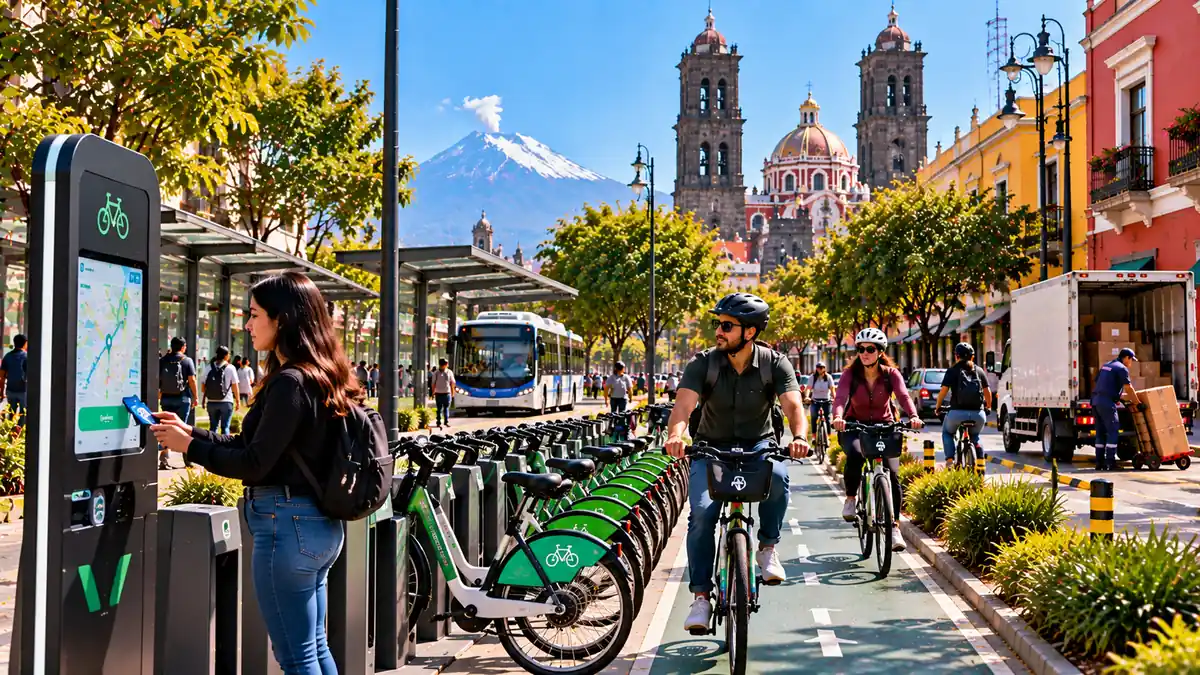
This pilot supports the design of a new system that addresses the gaps in the previous initiatives. In the delivery, the ACCESS team is working directly with the state-level Undersecretariat of Mobility and Infrastructure and evaluating potential operators including Lime, Sicrex and Ráfaga Mobility, alongside the state's own bike-unit prototype.
The pilot's technical work centres on defining viable coverage zones using socio-spatial data, and building a financing model that draws on alternative revenue sources so the system doesn't depend on a single operator.
02
At a glance
Challenge
Rebuild public and institutional trust in bike-sharing within a governance structure the city can oversee.
Solution
A state-led Bike Sharing System combining a locally fabricated bike unit with diversified financing and clearer contractual accountability.
Technology
Socio-spatial modelling to define coverage zones, alongside monitoring systems and data-sharing agreements with potential operators.
Avoid
Reduce short car trips that contribute to Puebla's rush-hour congestion by offering a viable cycling alternative.
Shift
Support a shift from private vehicles to bikes, building on the city's growing protected cycling network.
Improve
Improve system durability and public trust through stronger governance, diversified financing and lessons learned from BiciPuebla.
03
Expectedoutcomes
Environmental
Reduced GHG emissions and improved air quality as short car trips shift toward cycling, supported by the city's expanding protected bike lane network.
Social
Gender-sensitive station design supported by user safety perception surveys.
Economic & Operational
A financially sustainable system backed by diversified revenue sources
Digital & Innovation
Data-sharing agreements with system operators enabling ongoing monitoring of usage, coverage and safety indicators across the network.
Governance / Institutional Frameworks
A clearer state-level governance structure, with the Undersecretariat of Mobility and Infrastructure positioned to oversee contractual compliance.
Where ACCESS is working in Puebla
This map helps visitors explore where ACCESS is working and why each location matters. Toggle layers to see logistics activity, public transport corridors, curbside management areas and data-analysis geographies.
Interactive overview of ACCESS pilot and mobility focus areas.
What ACCESS will measure
What ACCESS will measure
The Puebla pilot will generate evidence on how to design a bike-sharing system that succeeds. Monitoring will focus on environmental, operational, social, gender, policy and governance results. This will include coverage, financing sustainability, safety and operator compliance. All of this information will support Puebla's Sustainable Urban Mobility Program and feed into shared lessons with Monterrey and other Mexican cities pursuing similar systems.
Gender and inclusion
Gender and inclusion
Women in Puebla face some barriers to safe cycling, from personal security concerns at stations and along routes, to a lack of gender-disaggregated data informing how the city's transport system is planned. ACCESS has the potential to address these challenges by embedding gender-responsive design into the new bike-sharing system from the start.
The pilot includes tailored actions shaped together with local partners. The ACCESS teams are following the ACCESS Guidelines for Responsible and Inclusive Digitalisation in Transport and are aligning activities with Mexico's Gender Action Plan and the safeguards for digitalisation in transport. These activities include:
- Designing cycle stations with gender-sensitive features, including adequate lighting, strategic location and proximity to emergency call or panic buttons.
- Collecting gender-disaggregated data on active system users. Surveying user perceptions of safety to guide station placement and operational improvements.
- Surveying user perceptions of safety to guide station placement and operational improvements.
- Sharing technical and policy recommendations with Monterrey and other Mexican cities to support gender-responsive bike-sharing design more broadly.Promote gender-responsive transport policies and planning tools.
From pilot to scale
Lessons beyond Puebla
The Puebla pilot is designed to generate lessons for other cities in Mexico and Latin America. ACCESS will use the results from Puebla to support replication, capacity building and policy recommendations on transport digitalisation, sustainable logistics and inclusive mobility planning
Download and explore
Explore resources, guidance and learning materials from the Puebla pilots to support sustainable logistics, inclusive mobility and evidence-based transport planning.
Key statistics and insights from Puebla.
Download city factsheetSummaries of the Puebla pilot projects.
View pilot briefsEvaluation and results from pilot implementation.
View monitoring reportsResources supporting inclusive and gender-responsive mobility.
View gender resourcesGuidelines for responsible data management and digitalisation.
View data guidanceTraining materials, tools and lessons from ACCESS.
Explore learning resourcesPractical steps for scaling and replicating pilot projects.
View replication checklistTake the next step with ACCESS
The Puebla pilots are designed to generate lessons for other cities in Mexico and Latin America. ACCESS will use the results from Puebla to support replication, capacity building and policy recommendations on transport digitalisation, sustainable logistics and inclusive mobility planning.