
📍 Mexico City
Mexico City
Turning one of the world's largest transport networks into a connected, data-driven system and making last-mile deliveries cleaner and more inclusive
Mexico City is testing digital tools that bring real-time data to its bus rapid transit network together with a pilot for a zero-emission, gender-inclusive model for last-mile urban logistics.
Mexico City at a glance
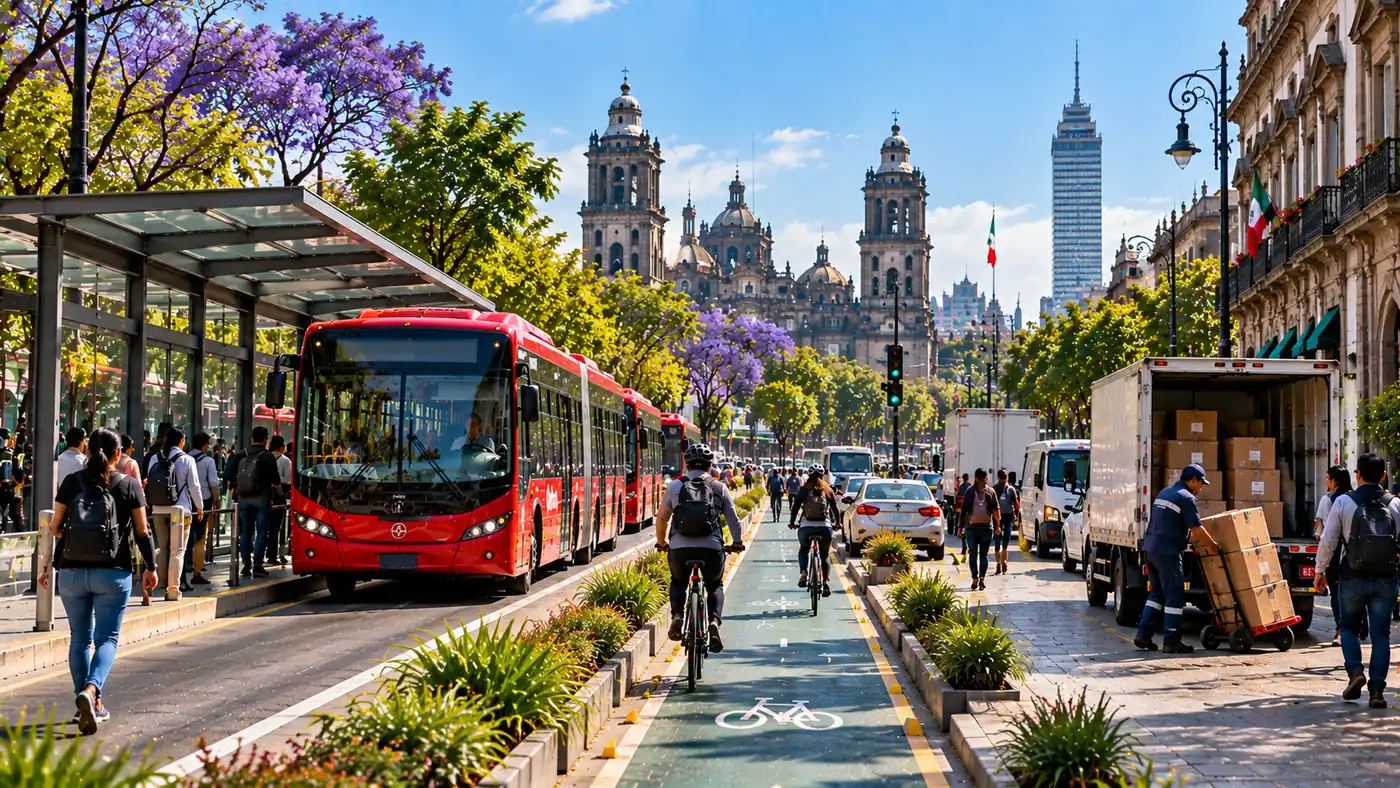
Mexico City runs one of the largest and most complex transport systems in the world, with agencies overseeing everything from the Metro and Metrobús BRT to electric buses and the Ecobici bike-share system. The city has already made real strides on digitalisation in transport. There are integrated payment systems, real-time tracking, digital bike-sharing and data-driven planning tools in one place.
Despite this progress, Mexico City still faces significant hurdles. There are inconsistent data formats across operators, uneven technical capacity between transport modes, and persistent traffic congestion and air pollution linked to freight and passenger vehicles. Cargo transport alone is responsible for a notable share of the city's PM10 and PM2.5 emissions, most of it from an ageing, diesel-powered delivery fleet.
Why Mexico City?
A strong foundation for digital mobility
Mexico City is at the frontier of transport digitalisation in a megacity. The ACCESS pilot will build on the strong existing digital infrastructure while tackling the coordination gaps that come with scale. It will focus on building a GTFS Realtime pilot that publishes live Metrobús data to the platforms millions of residents already use, and a cross-docking and electric-fleet pilot that pairs cleaner deliveries with new technical and operational roles for women in cargo transport.
Together, these pilots show how a megacity can turn existing digital assets and private-sector partnerships into measurable emissions reductions and more inclusive urban logistics.
Explore the ACCESS pilots in Mexico City
01
Aboutthe pilot
Courier fleet tracking and dynamic routing
Buenos Aires is growing more reliant on e-commerce, and that means more delivery vehicles navigating the city's dense traffic. This pilot introduces a dynamic routing and fleet tracking tool that helps drivers optimise delivery routes in real time. The technology adapts to changing traffic, demand, and vehicle availability. Focused on key commercial areas with high logistics demand, the pilot integrates carbon emissions calculations directly into last-mile delivery operations, addressing a need identified together with local stakeholders for more efficient, sustainable logistics.
The tool combines a mobile app for drivers with a dashboard for data analytics, built to integrate with services already in use. Express Logística and other logistics companies will apply the system's real-time route optimisation and emissions calculation features across selected commercial zones, with the pilot's success measured by the platform's reliability, ease of use, and its impact on delivery times, fuel consumption, and GHG emissions.
02
At a glance
Challenge
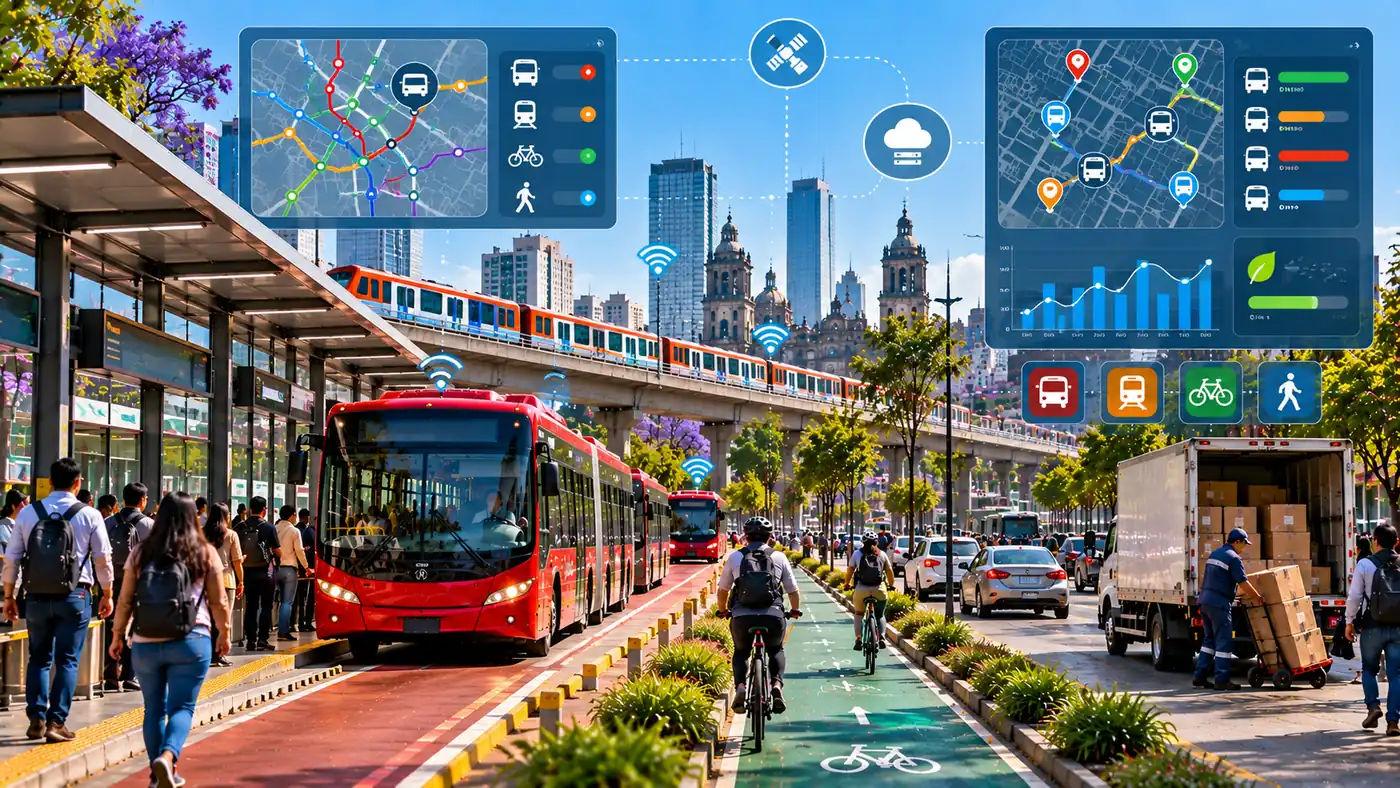
Standardise and consolidate transport data across operators with very different levels of digital readiness, to enable transparent, real-time public transport management.
Solution
A validated GTFS Realtime feed built on Metrobús's BRT network, using a technologically advanced operator as a flagship case for citywide expansion.
Technology
Real-time vehicle data developed and validated with Ualabee, reviewed by Google ahead of publication on major trip-planning platforms.
Avoid
Reduce unnecessary trips by giving riders accurate, real-time information on BRT vehicle location and arrival times.
Shift
Encourage a shift toward public transport by integrating Metrobús directly into the navigation apps people already rely on.
Improve
Improve transparency and operational efficiency across the public transport network, using Metrobús's success to bring other modes into a coordinated data system.
03
Expectedoutcomes
Environmental
More efficient BRT operations and better-informed passenger choices support lower per-trip emissions across one of the city's highest-capacity transport corridors.
Social
Clearer, more reliable trip information improves the everyday experience of Metrobús riders and builds public trust in digital transport tools.
Economic & Operational
Consolidated data between transit services strengthens decision-making and operational performance.
Digital & Innovation
A GTFS Realtime feed built, tested and published to major platforms such as Google Maps, using Metrobús as a scalable model for other Mexico City transport modes.
Governance / Institutional Frameworks
Metrobús's technological readiness becomes a demonstrated case study that other agencies coordinated by SEMOVI can follow, supporting the city's broader push toward a unified, transparent transport data platform.
02
Aboutthe pilot
Last Mile and Women in Cargo
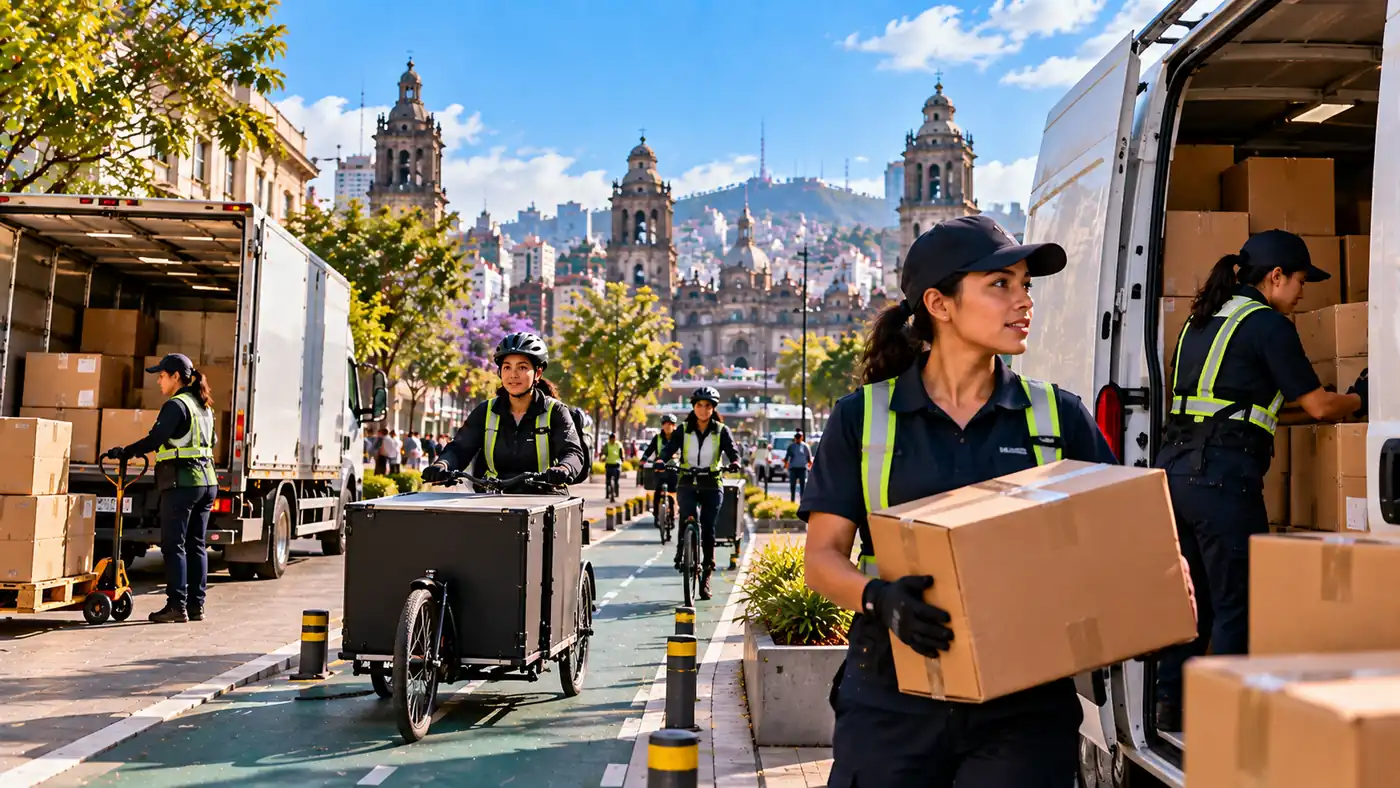
Mexico City's booming e-commerce sector relies heavily on an aging, diesel-powered delivery fleet. This pilot establishes a cross-docking site to act as a logistics hub where goods are consolidated and transferred from large trucks onto zero-emission vehicles such as electric cargo bikes and motorcycles. Paired with slow-charging infrastructure designed to optimise vehicle dwell times, the aim is to reduce the reliance on the existing delivery fleet. The pilot builds a fully digitally monitored, zero-emission delivery model.
Gender inclusion sits at the centre of the pilot's design. The pilot is built to create new technical, operational and digital roles in cargo transport specifically designed to be safer and more accessible for women entering the sector.
02
At a glance
Challenge
Blue boxes are frequently blocked, forcing drivers to circle for space and adding unnecessary emissions.
Solution
A cross-docking site combining goods consolidation with zero-emission delivery vehicles and slow-charging infrastructure tailored to fleet dwell times.
Technology
Route optimisation, real-time tracking and performance-monitoring platforms integrated with EV charging systems, developed with the Federal Electricity Commission (CFE) and private-sector technology partners.
Avoid
Avoid unnecessary long-haul truck trips into dense urban areas by consolidating goods at a strategically located cross-docking hub.
Shift
Shift last-mile deliveries from diesel-powered vehicles to electric cargo bikes, motorcycles and cargo bikes.
Improve
Improve delivery efficiency and workforce inclusion by combining telematics-based route optimisation with new safe, accessible roles for women in logistics.
03
Expectedoutcomes
Environmental
A decrease in CO₂ emissions and air pollution through the switch to an EV fleet and telematics-based route optimisation.
Social
Safer, cleaner working environments in cargo transport, with new technical, operational and digital roles designed to promote gender inclusion in the sector.
Economic & Operational
Functional cross-docking sites operating as strategic consolidation hubs.
Digital & Innovation
Data collected and analysed from pilot deliveries, feeding performance-monitoring platforms and informing future iterations of the model.
Governance / Institutional Frameworks
At least one actionable policy recommendation for city and regional governments, shared with other cities to support broader adoption of zero-emission, gender-inclusive logistics systems.
Where ACCESS is working in Mexico City
This map helps visitors explore where ACCESS is working and why each location matters. Toggle layers to see logistics activity, public transport corridors, curbside management areas and data-analysis geographies.
Interactive overview of ACCESS pilot and mobility focus areas.
What ACCESS will measure
What ACCESS will measure
The Mexico City pilots will generate evidence on how digital tools can improve both public transport transparency and the sustainability of urban logistics. Monitoring will focus on environmental, operational, social, gender, policy and governance results. All of this information will support city-level mobility and logistics policy and feed into national frameworks for transport digitalisation and gender-inclusive employment in Mexico.
Gender and inclusion
Gender and inclusion
Women in Mexico City's cargo transport sector remain significantly underrepresented, facing barriers around personal safety, physical demands traditionally associated with the role, and limited access to technical training.
Each pilot includes tailored actions shaped together with local partners. The ACCESS teams are following the Gender-Responsive and Inclusive Guidelines on Safeguards for the ACCESS project, aligning activities with Mexico’s Gender Action Plan, and promoting continuous learning and knowledge exchange. These activities include:
- Strengthen women’s technical skills and professional development in sustainable mobility and urban freight.
- Promote safer and accessible working environments and conditions to support women’s participation in traditionally male-dominated transport and logistics activities.
- Promote the exchange and uptake of gender-responsive approaches and lessons learned to support more inclusive freight and urban mobility planning and implementation.
From pilot to scale
Lessons beyond Mexico City
The Mexico City pilots are designed to generate lessons for other cities in Mexico and Latin America. ACCESS will use the results from Mexico City to support replication, capacity building and policy recommendations on transport digitalisation, sustainable logistics and inclusive mobility planning.
Download and explore
Explore resources, guidance and learning materials from the Mexico City pilots to support sustainable logistics, inclusive mobility and evidence-based transport planning.
Key statistics and insights from Mexico City.
Download city factsheetSummaries of the Mexico City pilot projects.
View pilot briefsEvaluation and results from pilot implementation.
View monitoring reportsResources supporting inclusive and gender-responsive mobility.
View gender resourcesGuidelines for responsible data management and digitalisation.
View data guidanceTraining materials, tools and lessons from ACCESS.
Explore learning resourcesPractical steps for scaling and replicating pilot projects.
View replication checklistTake the next step with ACCESS
The Mexico City pilots are designed to generate lessons for other cities in Mexico and Latin America. ACCESS will use the results from Mexico City to support replication, capacity building and policy recommendations on transport digitalisation, sustainable logistics and inclusive mobility planning.