📍 Lima-Callao
Lima-Callao
Building the evidence to electrify public transport
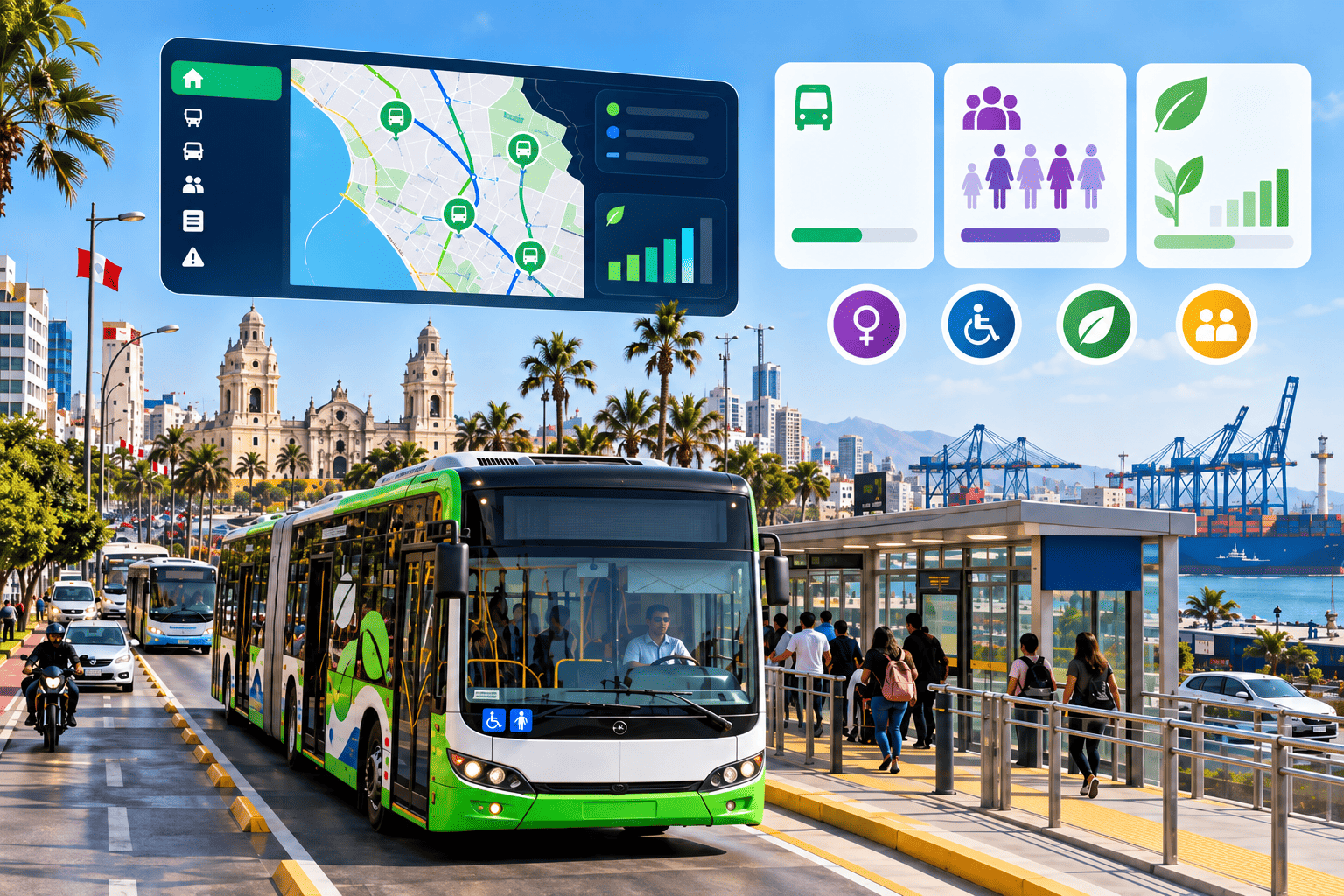
Lima–Callao is developing a web-based platform to monitor CNG and electric public transport buses side by side. By integrating GPS, fare-card, operational, energy, emissions and gender-disaggregated data, the pilot will give operators, technical teams, decision-makers and the public clearer evidence for cleaner, more efficient and more inclusive mobility.
Lima–Callao at a glance
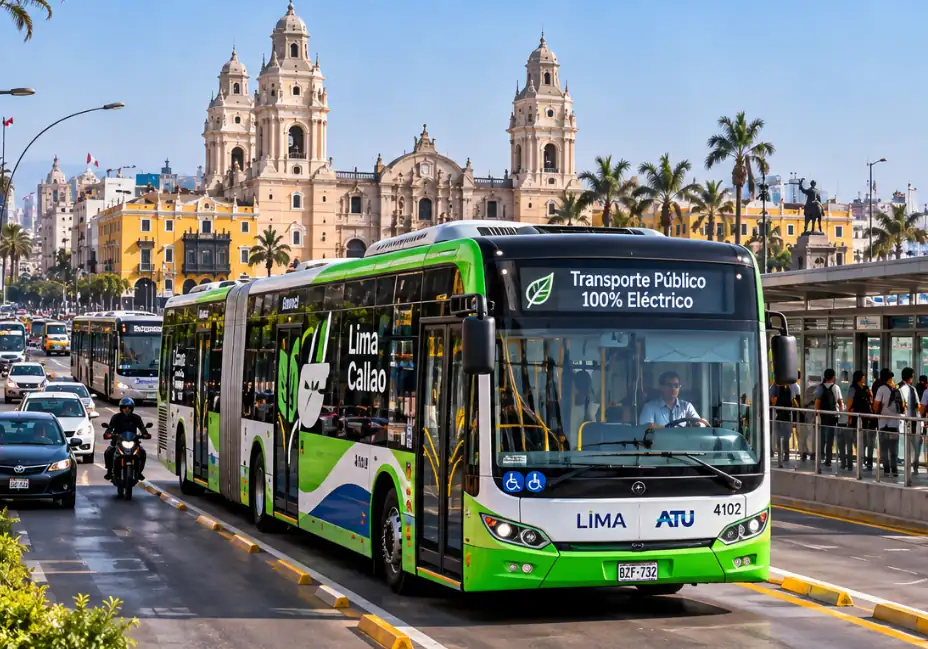
As the political and economic hub for more than 10 million residents, Lima faces a mobility landscape shaped by rapid, uneven growth and deep social and spatial fragmentation. Conventional buses, coasters and combis account for nearly 59.8% of daily trips, while the Metropolitano BRT and Metro Line 1 each serve only about 3.3%. An ageing fleet, insufficient road infrastructure, congestion and limited digitalisation contribute to poor efficiency, high greenhouse-gas emissions and serious PM₂.₅ air-quality impacts.
ATU is advancing GPS-based fleet supervision, fare integration, vehicle scrapping and the modernisation of the Metropolitano fleet, while initiatives such as Rutas Verdes point toward fully electric bus corridors and Lima’s goal of cutting greenhouse-gas emissions by 30% by 2030.
Why Lima–Callao?
A strong foundation for digital mobility
Lima–Callao needs practical evidence to guide bus electrification in a system where most trips are still served by conventional operators and where real-time tracking and electronic payments remain uneven. The pilot creates a controlled way to compare electric and CNG bus performance while testing how operational, environmental, financial and gender data can be brought together for public decision-making.
The work supports ATU’s modernisation agenda and complements existing rules on GPS monitoring and electric-bus technical standards. It also responds to urgent inclusion needs: women experience distinct travel patterns and severe under-reporting of harassment, while awareness of support channels remains low. By producing comparable evidence and a transferable digital platform, the pilot can strengthen future public-transport concessions, data-sharing practices and investment decisions.
01
Aboutthe pilot
A Digital Platform for Monitoring Clean Public Transport and Gender-Inclusive Mobility
The pilot will monitor Lima’s public transport buses powered by CNG and electricity through a web-based platform designed for technical staff, decision-makers, operators, general users and vulnerable populations. The platform will ingest GPS and fare-card data, calculate greenhouse-gas and operational indicators, and present results through interactive dashboards. UrbanTrips will support gender indicators and accessibility analysis, with the platform co-designed alongside ATU and participating public transport companies.
Implementation runs through baseline data collection and indicator definition, digital-platform development, bus monitoring, platform adjustments, and technology transfer to ATU. The pilot is planned from July 2026 to December 2027, with monitoring beginning in early 2027 and final transfer scheduled for the last quarter of 2027. Local partners include ATU, the Ministry of the Environment, the Ministry of Transport and Communications, Arequipa Transport Consortium SA and Allin Group.
02
At a glance
Challenge
Generating reliable operational evidence on how electric buses compare with CNG buses, while bringing fragmented mobility, environmental, financial and gender data into one decision-support system.
Solution
A co-designed web platform that integrates GPS, fare-card and vehicle data to monitor clean public transport, calculate indicators and support fleet-electrification decisions.
Technology
GPS and fare-card data ingestion, GHG and operational KPI engines, interactive dashboards, and UrbanTrips integration for gender and accessibility analysis.
Avoid
Use operational evidence to reduce inefficient service patterns, unnecessary idling and poorly utilised vehicle operations.
Shift
Support a shift toward cleaner, more reliable public transport by strengthening the evidence base for electric-bus deployment and future corridor expansion.
Improve
Improve bus operations, energy efficiency, emissions performance and user inclusion through integrated monitoring and data-driven fleet planning.
03
Expectedoutcomes
Environmental
Measured CO₂ reductions and improved air-quality evidence from comparing electric and CNG bus operations.
Social
Gender-disaggregated measures of users, accessibility, frequency of use and access to fare discounts, alongside safer and more inclusive transport planning.
Economic & Operational
Comparison of trip frequency, travel time, speed, idle time, distance, incidents, energy cost, maintenance cost, operating cost and energy consumption between CNG and electric buses.
Digital & Innovation
A transferable monitoring platform that consolidates multiple data sources, automates indicator processing and provides accessible dashboards for different stakeholder groups.
Governance / Institutional Frameworks
Evidence to support ATU’s GPS-monitoring and electric-bus standards, while testing data-governance agreements, open-data protocols and interoperability requirements for future concessions and programmes such as Rutas Verdes.
See the pilot on the map
The map shows the pilot area and where ACCESS is supporting public transport electrification and digital monitoring in Lima–Callao.
Interactive overview of ACCESS pilot and mobility focus areas.
What ACCESS will measure
What ACCESS will measure
Lima–Callao’s monitoring framework covers environmental, operational, financial, energy, gender and digital indicators. Measures include CO₂ emissions; trip frequency, average travel time, speed, idle time, kilometres travelled and technical incidents; energy and maintenance costs; energy consumption and battery health; the share and accessibility of female users; fare-discount uptake; and the availability, processing and integration of real-time data. Indicative comparisons include improving average speed from 40 to 43 km/h, reducing idle time from 15 to 10 minutes, lowering energy cost from S/ 1.48 to S/ 1.30 per kilometre, and reducing energy consumption from 4.32 to 1.25 kWh/km when moving from CNG to electric buses.
Gender and inclusion
Gender and inclusion
Women in Lima–Callao face distinct mobility patterns linked to care responsibilities as well as severe safety concerns. A 2024 ATU survey reported that 98.5% of sexual-harassment victims did not report incidents, 58.7% received no assistance, and fewer than 10% of users knew about institutional support protocols.
The pilot aligns with the broader Gender Action Plan and integrates gender considerations through a diverse internal and consulting team, participatory review, and gender-disaggregated data from the fare-management system. Activities include:
- Gender-disaggregated indicators covering the proportion of female users, accessibility by gender, frequency of use by gender and uptake of eligible fare discounts.
- Consultation and validation with a diverse project team and specialist advisers to ensure the platform and indicators reflect women’s mobility needs.
- Support for ATU initiatives that strengthen safety, reporting channels and women’s participation in the transport workforce.
From pilot to scale
Lessons beyond Buenos Aires
The Lima–Callao pilot is designed to expand as the electric-bus fleet grows and to be adopted by additional public transport concessionaires through ATU. Its methodology can be replicated in other Peruvian and Latin American cities as electric buses enter service. Scale-up will depend on national interoperability and data-protection guidance, financial or tax incentives for low-emission fleets, gender and safety metrics embedded throughout projects, and stronger technical capacity in smaller cities. Long-term sustainability is supported by hosting the platform with ATU and embedding training in the university curriculum.
Download and explore
Explore resources, guidance and learning materials from the Lima–Callao pilot to support public transport electrification, inclusive mobility and evidence-based transport planning.
Key statistics and insights from Lima–Callao.
Download city factsheetSummary of the Lima–Callao pilot project.
View pilot briefsEvaluation and results from pilot implementation.
View monitoring reportsResources supporting inclusive and gender-responsive mobility.
View gender resourcesGuidelines for responsible data management and digitalisation.
View data guidanceTraining materials, tools and lessons from ACCESS.
Explore learning resourcesPractical steps for scaling and replicating pilot projects.
View replication checklistReady to engage?
Explore resources, guidance and learning materials from the Lima–Callao pilot to support public transport electrification, inclusive mobility and evidence-based transport planning